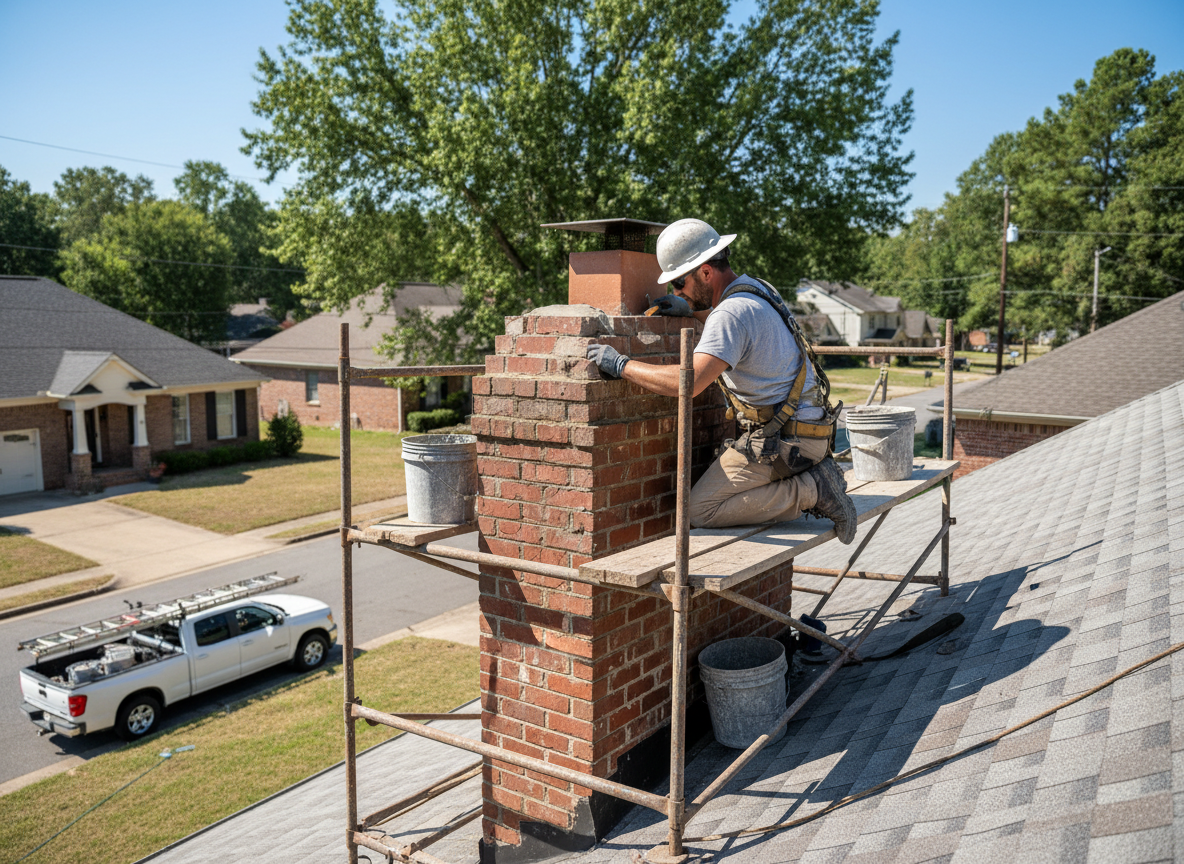
Montgomery sits in Hamilton County with many 1950s to 1970s brick homes whose chimneys suffer from Ohio's repeated freeze-thaw cycles. Snow and ice collect on the crown and flashing, then meltwater works into mortar joints that have already lost elasticity. Over a few winters the joints widen, bricks spall, and water reaches the flue liner, creating the exact conditions that turn small draft complaints into full liner replacement jobs.
When homeowners call for affordable chimney repair they often expect only a new cap or tuckpointing. In practice we first check crown integrity, then test for water penetration at the roof line where most Montgomery roofs meet the chimney. We also verify flue height meets current clearance rules above the ridge line so the fix does not create a new code issue during the next inspection.
Older clay liners in these neighborhoods crack when temperatures swing from single digits to the thirties within a day. Once a crack opens, creosote collects in the gap and the next hot fire can force heat through the wall. We carry both rigid and flexible stainless liners sized for the actual flue dimensions rather than assuming a standard 8-by-8 or 13-by-13 opening.
Seasonal Guidance
Before the first hard freeze we recommend checking for missing mortar and loose bricks while the joints are still dry. After heavy snow, inspect the crown for new hairline cracks that will expand once temperatures drop again. These quick checks prevent the larger water-damage repairs that appear every spring in Montgomery.
Technician insight
In Montgomery the thing that catches most people out with affordable chimney repair is the freeze-thaw action on 1960s brick chimneys along the north side of homes; the shaded side never dries between snow events so mortar keeps spalling even after a quick tuckpoint job.
North-facing chimney leak after early snow
Water stains appeared on the second-floor ceiling after the first measurable snow. Inspection showed open joints on the north face where sun never reached. We removed loose mortar, installed a new concrete crown with proper slope, and repointed with type-N mortar matched to the original brick. Draft improved and no further staining occurred through the rest of the winter.
How it works
- 1
Initial Site Assessment
We examine the crown, flashing, and visible flue from the roof and interior, noting any water staining or spalled brick.
- 2
Water and Draft Testing
A smoke test and water spray confirm active leak paths before any repair begins.
- 3
Material Selection and Quote
We match mortar type to existing brick and present a clear scope with no hidden add-ons.
- 4
Repair Execution
Work proceeds with new crown, repointed joints, or liner installation as needed, followed by a final draft verification.
Pricing
Owner provides written quotes after the roof inspection; final price reflects actual material and access needs.