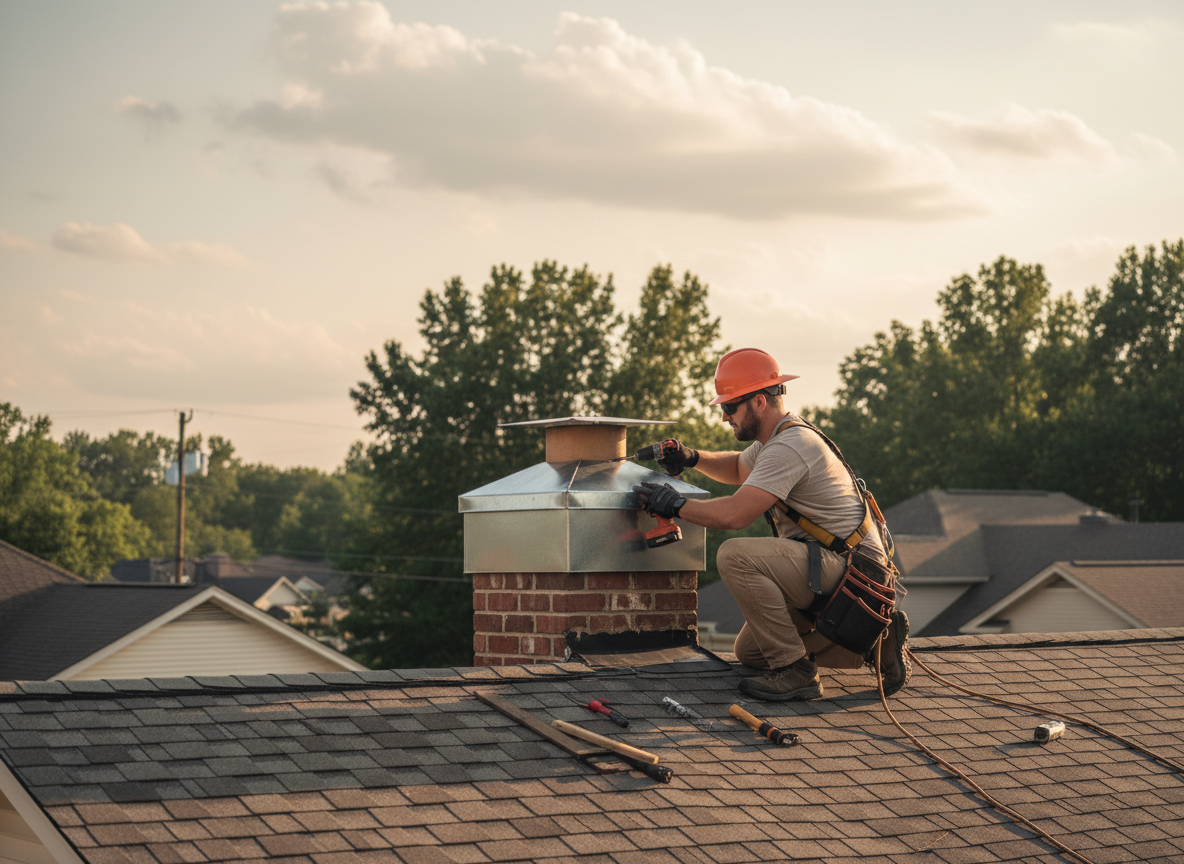
Chimney caps in the Montgomery area must handle frequent heavy downpours and high humidity that drive water deep into mortar joints on pre-1980 brick chimneys. A properly sized stainless steel or copper cap with a mesh screen stops both rain and nesting animals while allowing proper exhaust flow. Incorrect sizing often leads to backdrafting when winds pick up across the flatter terrain near the Alabama River.
Edge cases appear regularly on two-story homes in the Capitol Heights and Cottage Hill neighborhoods where narrow roof access and multiple flue liners require custom-fabricated caps rather than off-the-shelf models. Older clay flue tiles can crack during removal of an old cap, so we always inspect the crown and flashing before final attachment. Local building codes require spark arrestors on wood-burning appliances, which we incorporate into every installation.
Homeowners often overlook how tree cover in established Montgomery yards increases debris load on the cap screen, requiring a design with larger mesh openings that still blocks embers. We secure caps with stainless steel straps and screws rated for coastal humidity to prevent loosening during summer storms. This approach keeps water out of the smoke chamber and reduces future repair calls on the flue liner.
Seasonal Considerations
Installations scheduled before fall ensure the cap is seated before leaf drop and winter rains begin. Spring checks after pollen season reveal whether screens need cleaning to maintain draft.
Technician insight
In Montgomery, the thing that catches most people out with chimney cap installation is how the heavy clay soil and frequent rains cause older brick chimneys to settle unevenly, so a cap that looks square from the ground often needs shims once you get on the roof.
Cap Replacement on Settled Chimney
Problem: water stains appeared on the second-floor ceiling after heavy spring rains. What we found: the existing cap had lifted on one side due to uneven settling on a 1970s brick chimney. What we did: fabricated a custom stainless cap with adjustable straps and resealed the crown. Outcome: draft improved and no further water entry reported.
How it works
- 1
Site Assessment
We measure the flue opening and inspect the crown condition from the roof at your Montgomery address.
- 2
Material Selection
Choose stainless or copper cap sized to the existing flue with appropriate mesh for local debris and spark requirements.
- 3
Preparation
Remove old cap, clean the flue top, and check flashing integrity before fitting the new unit.
- 4
Installation
Secure the cap with stainless straps and verify draft with a smoke test before leaving the site.
Pricing
Cost depends on chimney height, flue count, and roof access; we provide upfront quotes after inspection.