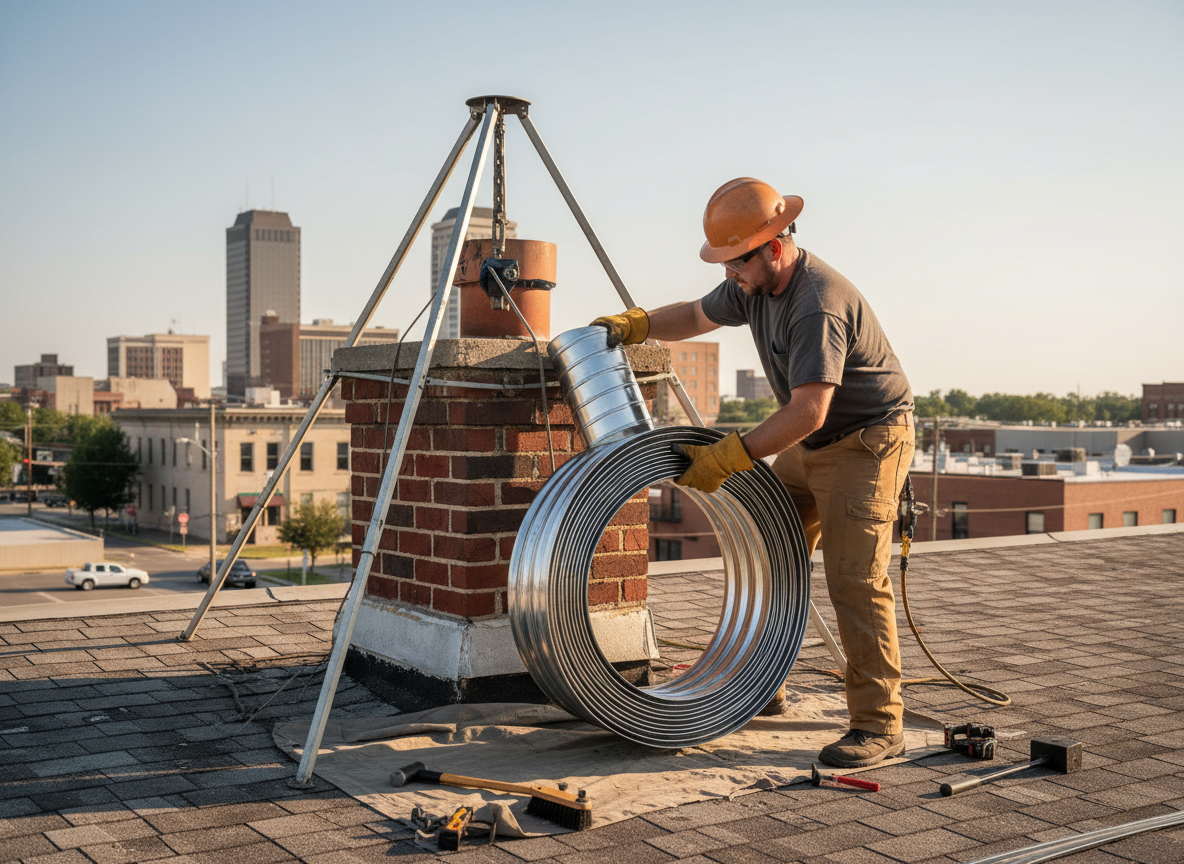
Chimney liners in Montgomery homes often fail from years of creosote buildup combined with Alabama's frequent humidity and temperature swings that accelerate corrosion in clay or metal liners. Older brick chimneys common in neighborhoods near downtown frequently show spalling or gaps where the liner no longer seals properly against the flue walls. When water penetrates these gaps it can stain interior ceilings or allow carbon monoxide to leak into living spaces during fireplace use.
Repair work here usually starts with a camera inspection to locate cracks or separations without tearing out the entire stack. We match the replacement liner material to the existing chimney size and fuel type, whether that means installing a stainless steel insert or repairing sections of clay tile. Access is often tight on two-story homes with narrow attic spaces, requiring careful removal of old liner pieces to avoid damaging surrounding masonry.
Local building codes require liners to maintain proper clearance and draft performance; skipping a proper fit can fail inspection or create backdraft issues when the fireplace is lit. We always verify the new liner terminates correctly above the chimney crown and seals at the smoke chamber to prevent the moisture intrusion that is common after heavy rains in the Montgomery area.
Technician insight
In Montgomery, the thing that catches most people out with chimney liner repair is how quickly rainwater gets behind a cracked clay liner on older two-story homes near the river; once moisture reaches the brick it starts pushing the liner away from the walls and the job turns from a simple insert into a full tear-out.
Cracked Liner After Heavy Rain
Water stains appeared on the ceiling below the chimney after a spring storm. Camera inspection showed a separated clay liner section allowing water to track down the flue. We removed the damaged tiles, installed a continuous stainless liner sized to the existing flue, and resealed the crown. No further leaks occurred during the next heavy rain.
How it works
- 1
Camera Inspection
We run a high-resolution camera through the flue to map cracks, separations, and creosote deposits while documenting the chimney's condition from the firebox to the crown.
- 2
Material Assessment
We determine whether the existing liner can be patched or needs full replacement based on fuel type, chimney height, and access points in the home.
- 3
Liner Removal or Repair
Old sections are extracted carefully or repaired in place, then a new stainless or cast-in-place liner is installed to restore a continuous sealed surface.
- 4
Final Testing and Cleanup
Draft is verified with a smoke test and the work area is left clean before we leave the property.
Pricing
Cost depends on chimney height, liner material, and whether the flue must be fully relined or only repaired in sections.