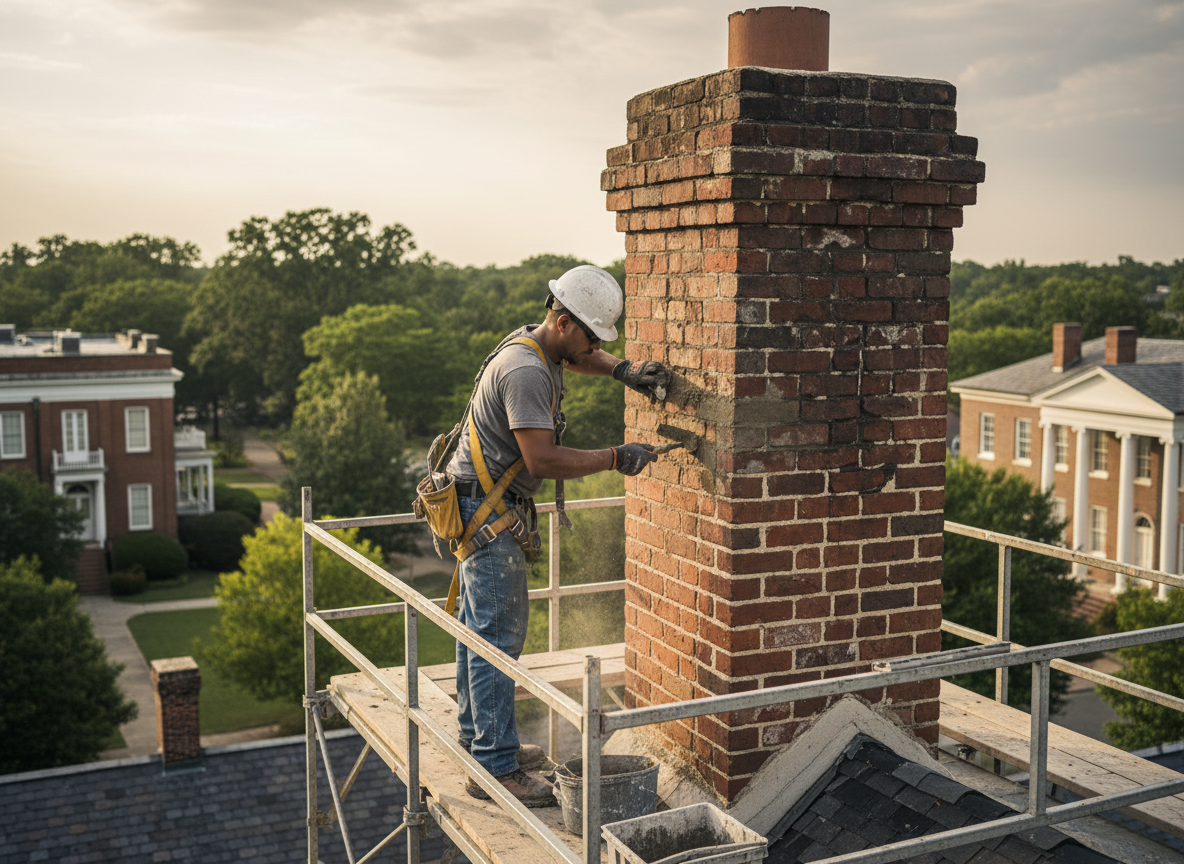
Chimney mortar repair addresses the deterioration of joints between bricks or stones that occurs from years of heat cycling and moisture exposure. In Montgomery homes built before the 1980s, many chimneys use standard lime mortar that was never intended for constant high temperatures, so sections near the flue often powder or crack first. Technicians remove loose material to sound mortar, then tuck-point with refractory cement rated for 2000 degrees or higher to match the original joint profile and prevent further water intrusion.
Edge cases include chimneys where settling has shifted the crown or where trees drop leaves that trap moisture against the stack. Access on two-story homes with steep roofs requires proper staging, and any repair must keep the flue liner intact so combustion gases continue venting properly. Homeowners sometimes attempt DIY caulking on visible cracks, but that traps moisture behind the patch and accelerates brick spalling once winter temperatures drop.
Code considerations in Montgomery County focus on maintaining proper clearance to combustibles and ensuring the repaired section does not obstruct draft. A proper repair leaves the exterior joints tooled concave so water sheds away from the brick face rather than pooling. Skipping the final wash and inspection can leave small voids that reopen within a single heating season.
Technician insight
In Montgomery, the thing that catches most people out with chimney mortar repair is how the clay-heavy soil under older brick homes causes differential settling that reopens joints within two seasons if the crown and flashing are not addressed at the same time.
Eroded Joints on Two-Story Brick Stack
Homeowner noticed white powder on the living-room mantel after heavy rain. Inspection showed multiple open joints above the second-floor line where mortar had washed out. Crew removed loose material, repointed with refractory mortar, and sealed the crown. Draft test confirmed proper venting with no further water tracking.
How it works
- 1
Initial Assessment
Technician climbs to the roof and inspects every joint from crown to cleanout, noting loose bricks, water staining, and any liner damage visible through the flue.
- 2
Material Removal
Old mortar is ground out to a consistent depth of three-quarters inch using diamond blades, taking care not to damage surrounding brick faces.
- 3
Repointing
Refractory mortar is packed in layers, tooled to shed water, and allowed to cure before the flue is tested for draft.
- 4
Final Check
The chimney is swept and a camera inspection confirms the flue remains unobstructed before the homeowner is shown the completed work.
Pricing
Upfront quotes provided after on-site inspection; final cost depends on chimney height, extent of joint damage, and roof access.