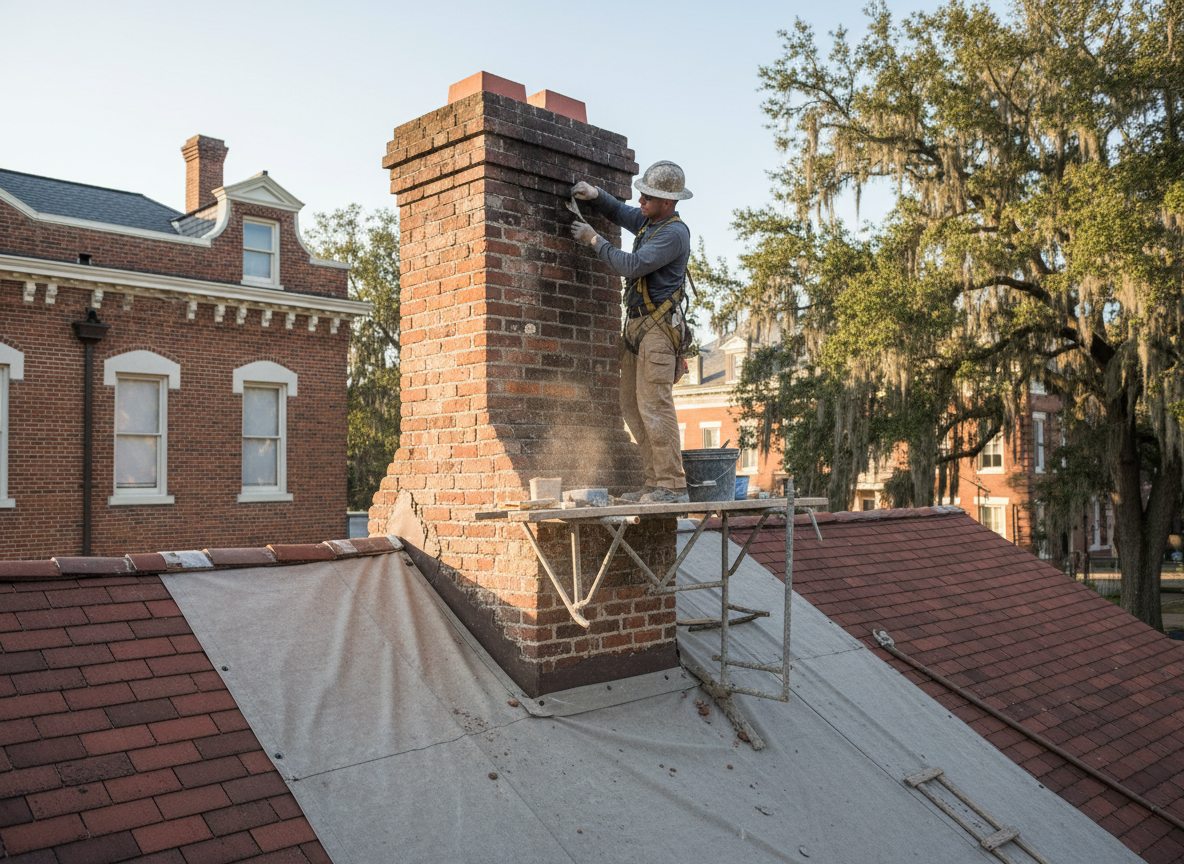
Chimney restoration in Montgomery often starts with assessing brick and mortar deterioration caused by decades of freeze-thaw cycles and heavy summer humidity. Homes built before 1970 in neighborhoods near downtown frequently show spalling bricks and eroded flue liners that allow water intrusion into attic spaces. We inspect for creosote buildup and structural shifts where the chimney meets the roofline, then replace damaged sections with matching materials to maintain the original look and function.
Restoring a chimney here requires attention to the clay tile liners common in Montgomery's mid-century housing stock. These liners crack from repeated heating and cooling, letting smoke and moisture escape into walls. We remove failed sections, install new liners sized for the appliance, and seal the crown with a concrete cap designed to shed Alabama's frequent thunderstorms. Homeowners notice improved draft and fewer odors once the work is complete.
Code compliance matters on every job because Montgomery follows current IRC standards for chimney height and clearance. We check that the restored structure clears the roof peak by the required distance and that any new flashing integrates with existing shingles without creating leak points. Skipping these details leads to failed inspections or recurring water damage during the wet season.
Edge cases include chimneys leaning from soil settlement along the Alabama River corridor or those with added gas inserts that changed the original draft requirements. In both situations we document the existing condition, recommend targeted rebuilds rather than full demolition, and coordinate with the homeowner on scheduling to limit downtime.
Technician insight
In Montgomery, the thing that catches most people out with chimney restoration is how quickly water gets behind the crown on pre-1960 brick homes near the river; the high humidity keeps the mortar soft longer than folks expect, so a small crack turns into a full liner job if you skip annual checks.
Leaning Chimney on Older Brick Home
The chimney on a 1950s house in Montgomery showed visible tilt and interior water stains after heavy rains. Inspection found settled foundation soil and cracked clay liners allowing moisture into the attic. We rebuilt the upper third with new brick and mortar, installed a stainless liner, and added proper flashing. The homeowner reported dry ceilings and steady draft the following winter.
How it works
- 1
Initial Assessment
We examine the chimney exterior, flue, and crown for cracks, spalling, and water damage while noting any nearby roof or attic issues.
- 2
Material Matching
We select replacement bricks, mortar, and liners that match the existing construction to preserve appearance and performance.
- 3
Repair Execution
Damaged sections are removed and rebuilt, new liners installed if needed, and the crown sealed against local weather.
- 4
Final Inspection
We verify draft, clearances, and weatherproofing before cleanup and walkthrough with the homeowner.
Pricing
Cost depends on chimney height, extent of brick or liner damage, and whether additional flashing or crown work is required.