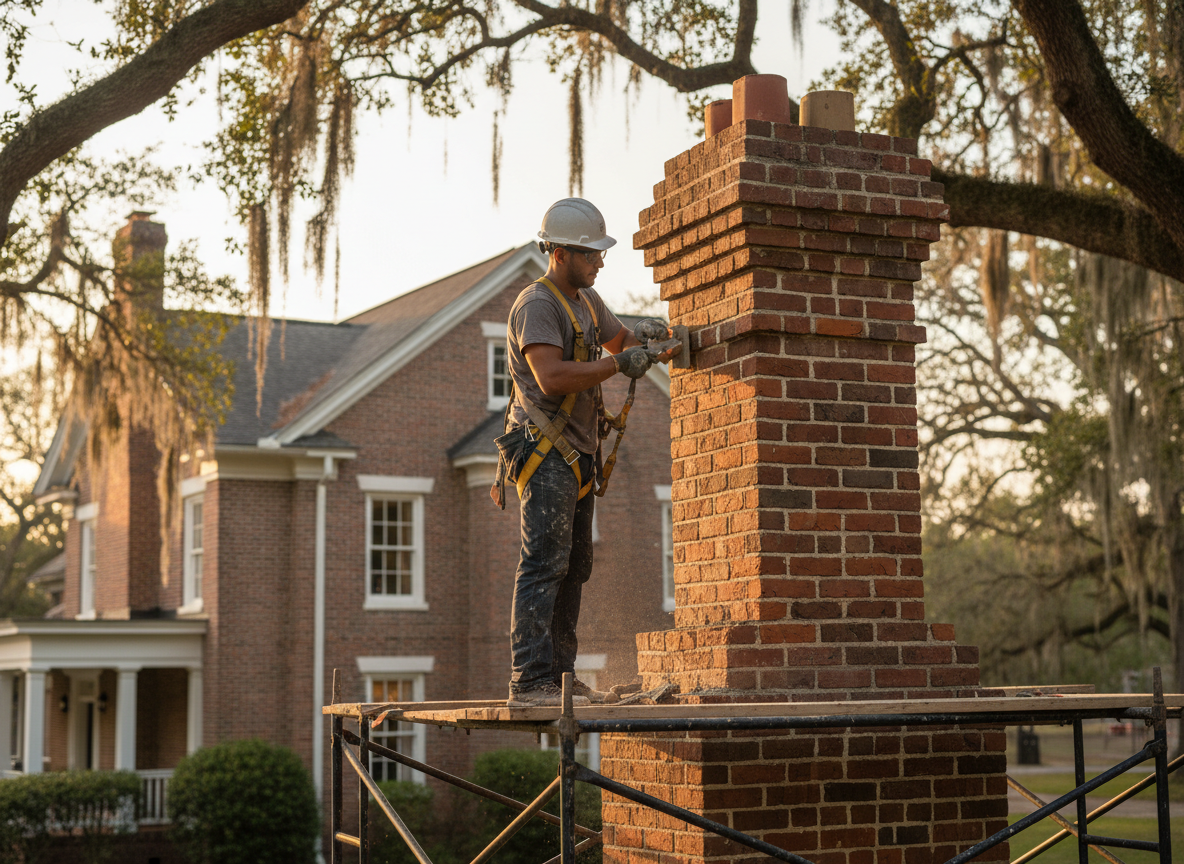
Chimney tuckpointing in Montgomery addresses the constant expansion and contraction that occurs when winter temperatures drop below freezing and then rise again. Older brick homes common in Montgomery and nearby Cincinnati suburbs often have original lime-based mortar that has eroded, allowing water to penetrate behind the flue liner. We remove the failing mortar to a consistent depth, clean the joints, and install new mortar matched in color and composition to prevent future cracking from soil movement along the rolling terrain near the Little Miami River.
Homeowners in Montgomery frequently overlook early signs such as white efflorescence or loose bricks at the crown. Once moisture reaches the flue, it accelerates deterioration during the humid summers that follow cold snaps. Proper tuckpointing requires raking joints without damaging the brick faces and tooling the new mortar to shed water away from the chimney stack. We also check for hairline cracks in the crown that can reintroduce water even after the sides are repaired.
Code considerations in Hamilton County require that any work on masonry chimneys maintains proper clearance from combustible framing. Tuckpointing crews must verify that the flue liner remains intact because Montgomery homes built before 1970 often have unlined or partially lined chimneys. Skipping this inspection can lead to hidden damage that only appears after the next heavy rain or ice storm.
The process demands the right mortar mix for the age of the home. Using modern Portland cement on historic brick can cause the softer original bricks to spall within a few seasons. We match the original mortar’s permeability so moisture can escape rather than become trapped inside the walls.
Technician insight
In Montgomery, the thing that catches most people out with chimney tuckpointing is how quickly the freeze-thaw cycles along the river valley destroy new mortar if the original mix isn’t matched for breathability. Homeowners often point to the visible sides and miss the back of the stack against the house where water sits longest.
Eroded Joints on a 1960s Brick Chimney
Water was entering through open joints on the north face after several winters. We found the crown had settled slightly due to soil movement common on the slopes in Montgomery. After raking and repointing with a lime-rich mix, the homeowner reported no more interior staining during spring rains.
How it works
- 1
Inspection and Joint Assessment
We examine every joint from crown to roof line, noting depth of erosion and any loose bricks on homes in Montgomery neighborhoods.
- 2
Mortar Removal
Old mortar is cut out to a uniform depth without damaging brick edges, using hand tools on historic masonry common in the Montgomery area.
- 3
Joint Cleaning and Preparation
Dust and debris are removed and joints are dampened to ensure proper bond with the new mortar mix.
- 4
New Mortar Installation
Color-matched mortar is packed in layers and tooled to shed water while matching the original profile of surrounding chimneys.
- 5
Final Cure and Check
We return after curing to verify the work and confirm no new water entry points remain on the stack.
Pricing
Cost depends on chimney height, number of sides requiring work, and mortar condition; we provide upfront quotes after inspection.