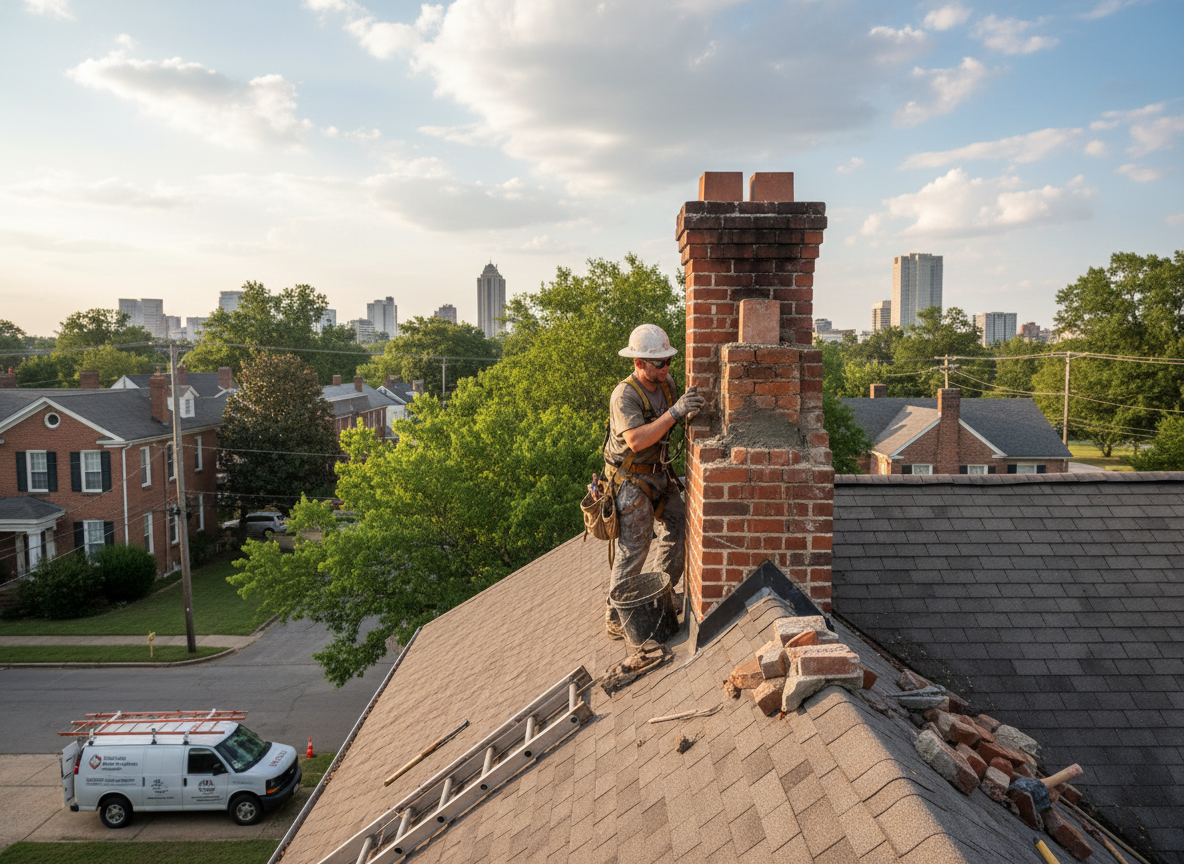
Emergency chimney repair in Montgomery often involves older brick and masonry chimneys common in homes built before the 1970s. Heavy rain and freeze-thaw cycles typical of southwest Ohio can widen existing mortar cracks or dislodge flue tiles, allowing water to reach interior framing. Technicians must first stabilize the structure before addressing draft loss or creosote buildup that creates immediate fire hazards.
When a chimney shows sudden leaning or spalling bricks after high winds, the job requires temporary shoring and careful removal of loose material to avoid collapse onto roofs or yards. Local codes in Montgomery County require proper flashing integration with asphalt or metal roofs, and any repair must restore the chimney to a safe draft without altering the original flue size. Homeowners frequently overlook crown damage that lets water pool inside the flue, leading to rapid deterioration of the smoke chamber.
On-site assessment includes checking for carbon monoxide pathways through cracks that connect to living spaces, a risk heightened in tightly sealed Montgomery homes. Repair crews carry replacement flue liners sized for the specific appliance and use refractory mortar matched to existing brick to maintain thermal expansion rates. Delaying response after noticing smoke backing into rooms can allow soot to embed in drywall and insulation throughout the house.
Technician insight
In Montgomery, the thing that catches most people out with emergency chimney repair is water trapped behind the crown on pre-1980 brick chimneys; once freeze-thaw starts, the whole stack can shift within a single winter because the clay tile flue no longer supports the outer brick.
Leaning Chimney After Heavy Rain
A Montgomery homeowner noticed the chimney tilting after several days of rain. Inspection revealed saturated mortar and a cracked crown allowing water into the flue. Crew installed temporary bracing, replaced the crown, and relined the flue to restore draft. The chimney was returned to safe operation without further movement.
How it works
- 1
Initial Call and Dispatch
Answer the 24/7 line, gather details on visible damage or smoke issues, and send the nearest crew from the Montgomery base.
- 2
On-Site Safety Check
Secure the area, inspect for structural instability, and test for carbon monoxide before any hands-on work begins.
- 3
Damage Assessment
Examine crown, flue, flashing, and masonry; identify water intrusion points and draft obstructions specific to local housing stock.
- 4
Temporary Stabilization
Install shoring or caps as needed to prevent further collapse while permanent materials are prepared.
- 5
Permanent Repair and Verification
Complete masonry or liner work, restore flashing, and confirm proper draft before leaving the site.
Pricing
Pricing depends on damage extent, required materials, and whether temporary shoring is needed; upfront quotes are provided after assessment.