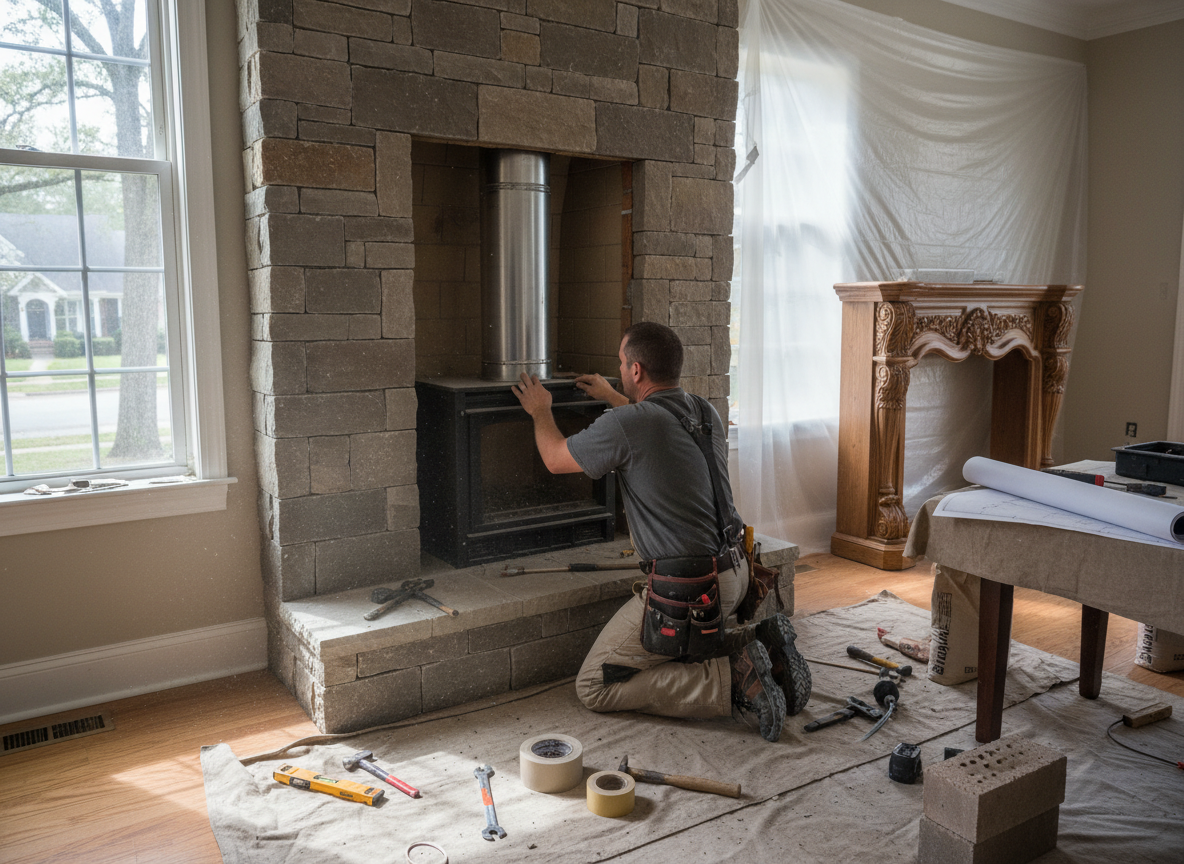
Montgomery homes range from early 20th-century brick structures near downtown to mid-century ranches in areas like Cloverdale and Capitol Heights. These older chimneys often lack modern clearances or proper liners, so fireplace installation starts with a full flue inspection to confirm the masonry can support the new unit. Humidity and occasional heavy rains can drive moisture into flue joints, making stainless-steel liners and proper flashing details essential to prevent future water damage to the firebox.
Gas fireplaces are popular here because they start quickly during rare cold snaps without the mess of wood. Installation requires running new gas lines that meet local codes and ensuring the vent terminates above the roofline to clear nearby trees common in east Montgomery. Wood-burning inserts demand extra attention to hearth extensions because many existing fireplaces sit on raised brick that may not meet current clearance rules.
We always verify draft and combustion air before finishing. Skipping this step in tightly sealed newer homes around the Montgomery area can lead to smoke spillage or inefficient burns once the unit is in use.
Local Climate Considerations
Montgomery's humid subtropical weather means temperature swings and moisture cycles stress chimney crowns and flashing year-round. Fireplace installations here routinely include extra sealing at the roofline to handle summer storms and winter condensation inside the flue.
Technician insight
In Montgomery, the thing that catches most people out with fireplace installation is the age of the brick chimneys in neighborhoods like Old Cloverdale. Many were built before modern liner requirements, so we often find deteriorated mortar that lets moisture in during our humid summers and then cracks further when the new unit heats up.
Cloverdale Fireplace Insert
Homeowner wanted a gas insert in a 1940s brick fireplace that had never been lined. Inspection showed open mortar joints and poor draft. We installed a stainless liner, sealed the crown, and fitted the insert with proper clearances. The unit now drafts cleanly and the homeowner reports no smoke issues during use.
How it works
- 1
Site Assessment
Measure the existing chimney, check liner condition, and confirm clearances against Montgomery building requirements.
- 2
Unit Selection and Planning
Review gas or wood options that fit the home's construction and discuss venting paths that work with the roof pitch common in the area.
- 3
Installation
Set the unit, run required venting or gas lines, install liners if needed, and seal all penetrations against local weather exposure.
- 4
Testing and Handover
Perform draft and safety checks, then walk through operation and maintenance specific to Montgomery conditions.
Pricing
Cost depends on fireplace type, existing chimney condition, and any liner or venting work needed; we provide upfront quotes after inspection.