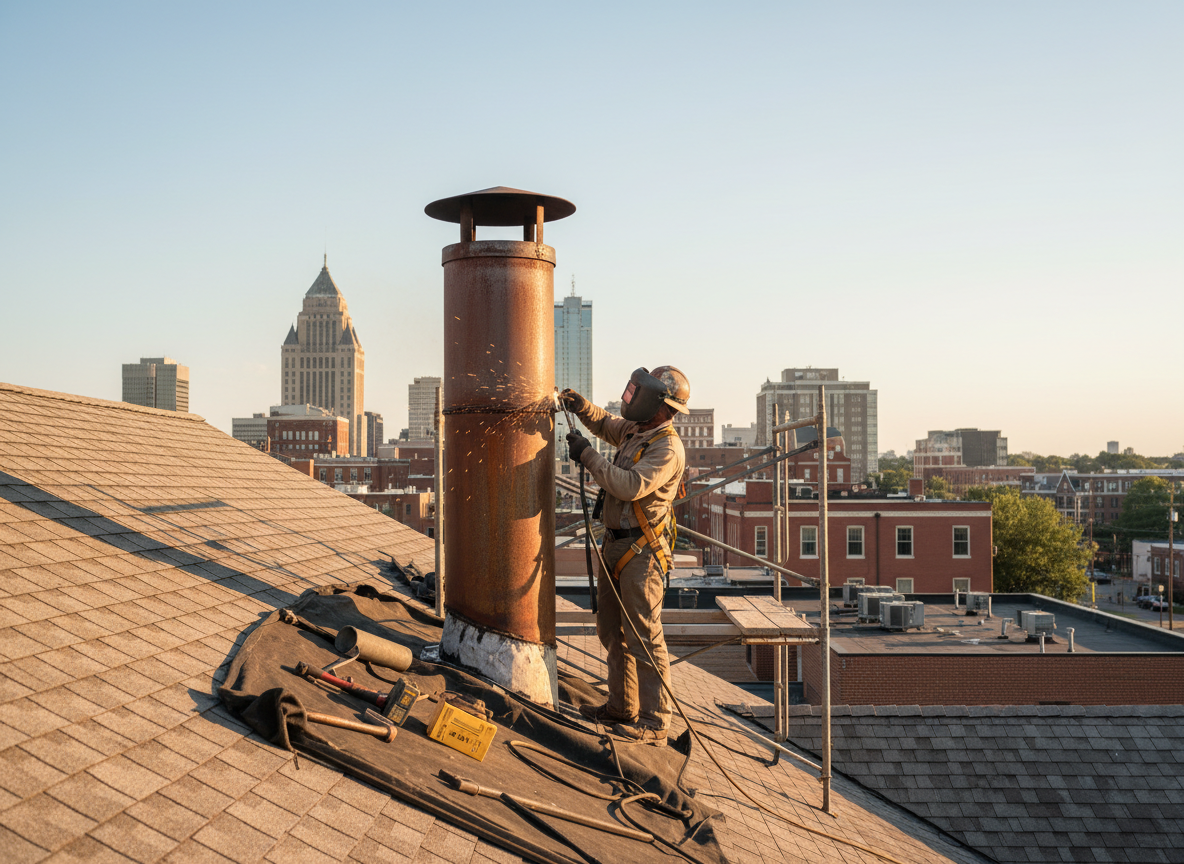
Metal chimneys in Montgomery homes often suffer from corrosion where the pipe meets the roofline. Ohio winters bring repeated freeze-thaw cycles that crack sealant and allow water to reach the inner liner. When this happens the outer metal expands and contracts, loosening connections and creating small gaps that draft cold air or let smoke escape into the attic. Homeowners notice staining on ceilings or a metallic smell when the furnace runs. We inspect the full length of the chase, check for proper clearances to combustibles, and replace damaged sections with matching gauge material rather than patching over weakened spots.
Flashing around metal chimneys is another frequent failure point on houses built in the Montgomery area. Older roofs use step flashing that can pull away after decades of exposure. When water gets behind it, the wood sheathing rots and the chimney base shifts slightly, stressing the metal joints. We remove the old flashing, install new lead or copper step flashing integrated with the existing shingles, and seal the top with high-temperature caulk rated for the local temperature swings. This prevents recurrence without requiring a full chimney rebuild.
Code requirements in the Montgomery area call for continuous positive connection from appliance to termination and proper termination height above the roof. Metal chimney repairs must maintain those clearances, especially on two-story homes where wind can push exhaust back toward windows. We verify draft with a smoke test after any section replacement and document liner condition so owners know whether a full reline will be needed later.
Technician insight
In Montgomery the thing that catches most people out with metal chimney repair is how quickly freeze-thaw cycles on older two-story homes loosen the flashing at the roofline, letting water reach the wood sheathing before any rust shows on the pipe itself.
Rusted Joint on Two-Story Metal Chimney
A Montgomery homeowner noticed ceiling stains after heavy rain. We found the metal joint above the second floor had corroded where flashing had pulled away. We replaced the upper section, reinstalled integrated step flashing, and sealed the penetration. The draft tested correctly and no further leaks occurred.
How it works
- 1
Initial Assessment
We arrive at the Montgomery address and examine the exterior metal stack, roof penetration, and interior connections for visible rust, gaps, or water intrusion.
- 2
Detailed Inspection
Using a camera and moisture meter we check the liner, joints, and flashing condition without unnecessary demolition.
- 3
Targeted Repair
Damaged sections are cut out and replaced with matching metal; new flashing and high-temperature sealant are installed to restore weather-tight performance.
- 4
Final Verification
A smoke test confirms proper draft and we walk the homeowner through the repaired areas before leaving.
Pricing
Upfront quotes provided after inspection; cost varies with chimney height, extent of rust, and roof access.